Case Studies

Reductivist Shop Assistant

Reductivist Shop Assistant

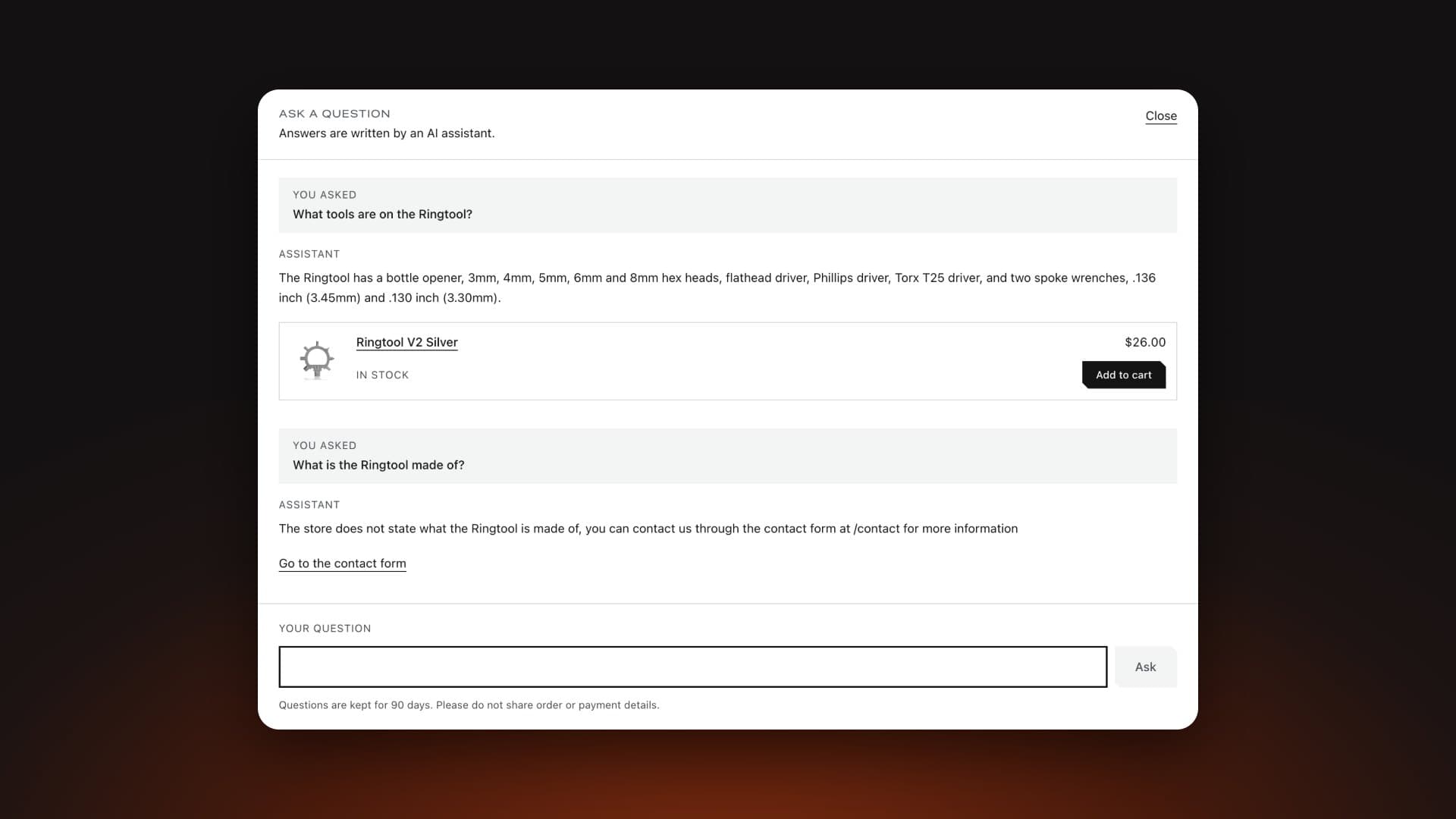
We built a question-answering assistant for Reductivist, a small California brand that sells minimalist objects made in the USA. Shoppers ask about products, shipping and returns, and the assistant answers from the store's own facts and live catalog, or says it does not know and points to the contact form. The model never states a price: it names products, and the store's own data supplies the price and stock on each card. It runs on Cloudflare's free Workers AI allocation, with daily limits that keep it there, so it has no running cost. Before launch it was tested against 61 questions, including prompt injections and invented policies, and the test report lists every failure and what was changed.
Hiring Signal Pipeline

Hiring Signal Pipeline

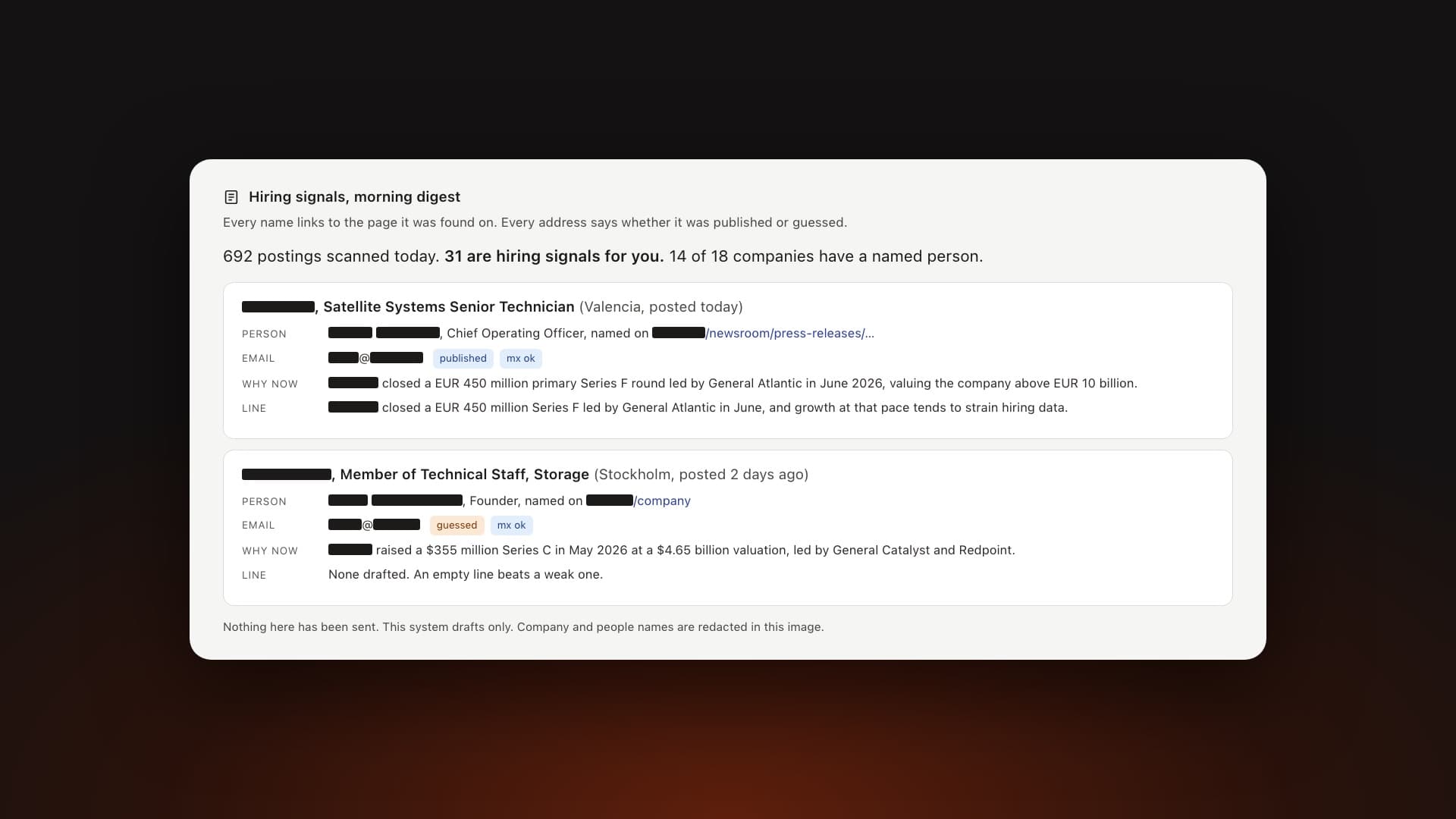
We built a daily lead engine for recruitment agencies. Each morning it scans public job boards for companies that have just started hiring for the roles an agency places, finds one named person to write to, researches one checkable reason to write now, and drafts an opening line from that fact. It runs on free public sources only, with no paid data provider and no fee per lead. Every name is kept with the page it came from and checked against that page, every address says whether it was published or guessed, and nothing is ever sent. A person reads the digest and decides who hears from them.

Evidence-based ATS

Evidence-based ATS

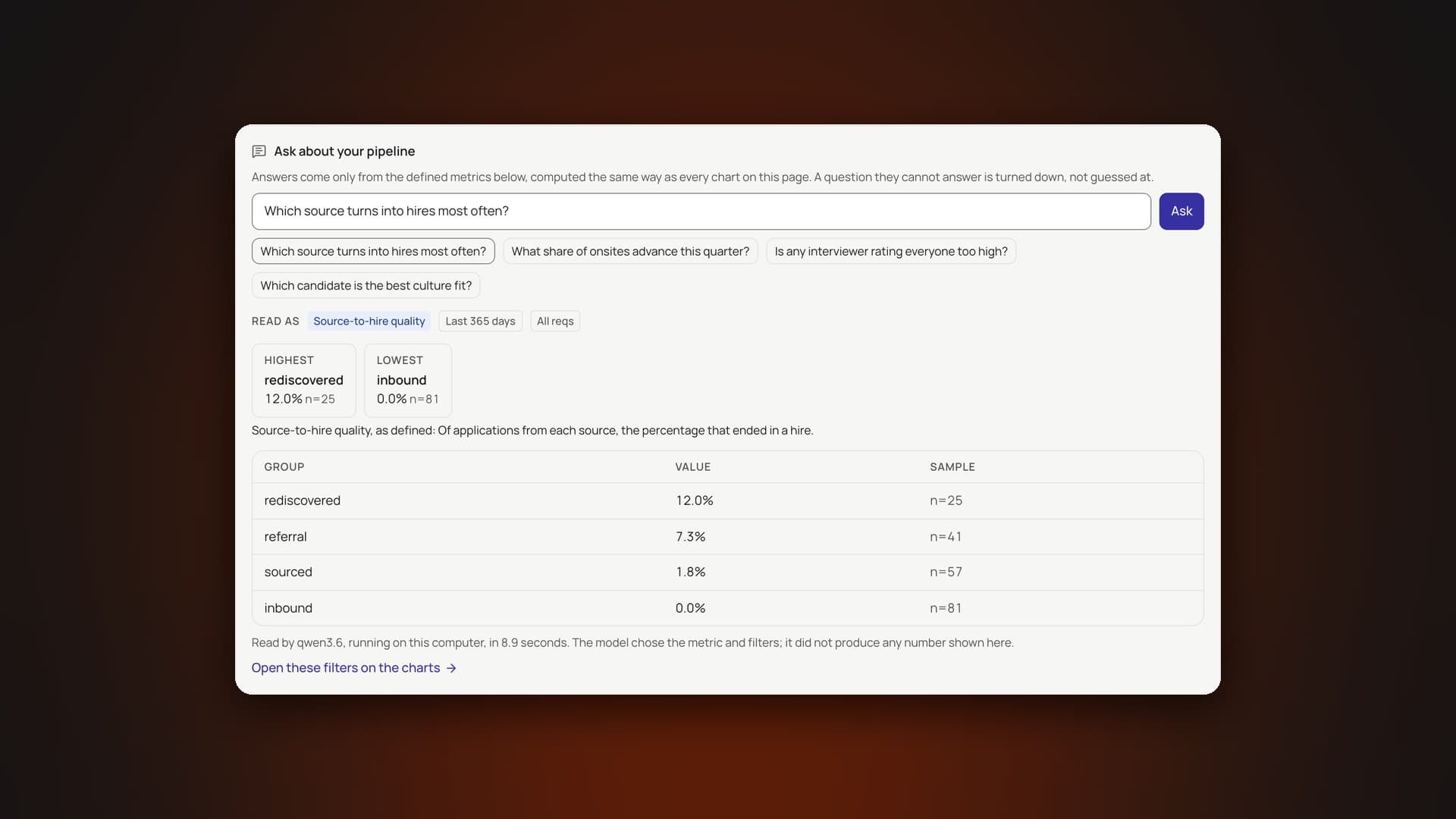
We built an applicant tracking system for small in-house recruiting teams, with three AI features that each have to prove their output before anyone sees it. A notetaker drafts the interview scorecard from raw notes, a question box answers plain questions about the hiring pipeline, and a screening summary sums up each candidate in sentences that cite their source. The model runs on the recruiter's own computer, so candidate data never leaves the machine and no call costs anything. Every quote is checked word for word against its source, every number comes from code rather than the model, and a person makes every hiring decision.

Design Engineer IDE

Design Engineer IDE

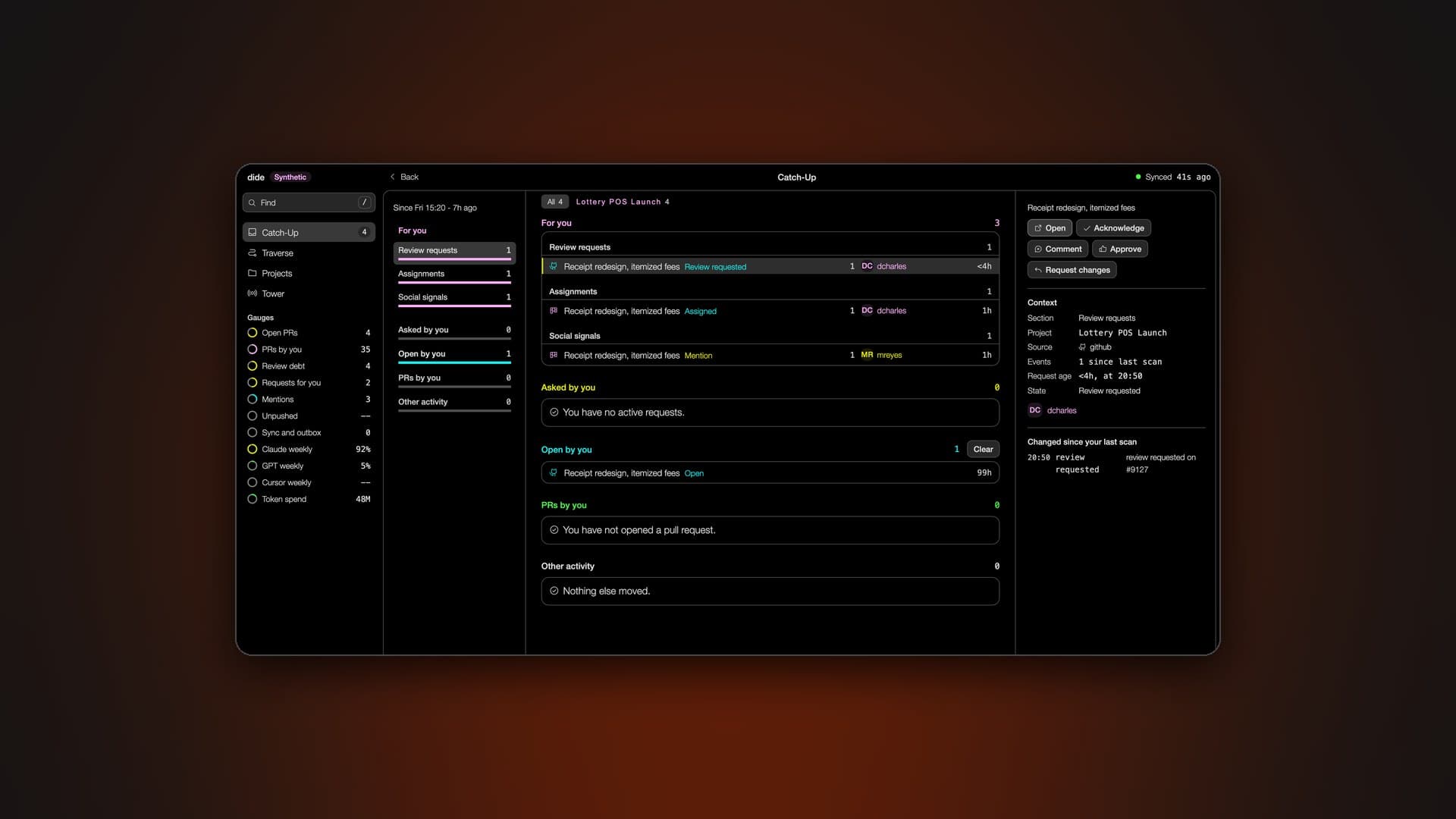
dide, the Design Engineer IDE, is a project workspace for designers who build: the people who ship interface code, review pull requests, follow tickets across teams, and run several AI coding agents at once. Instead of another dashboard, dide keeps a local record of everything that happens across Linear, GitHub and a markdown knowledge base, joins it into one thread per piece of work, and lets you act on it from the same screen. It answers the questions that cost the most time: what changed since I last looked, what is waiting on me, what is quietly stalling, and what did the agents do while I was in a meeting. All of it runs and stays on the user's own machine.

Hello Cloud IT

Hello Cloud IT

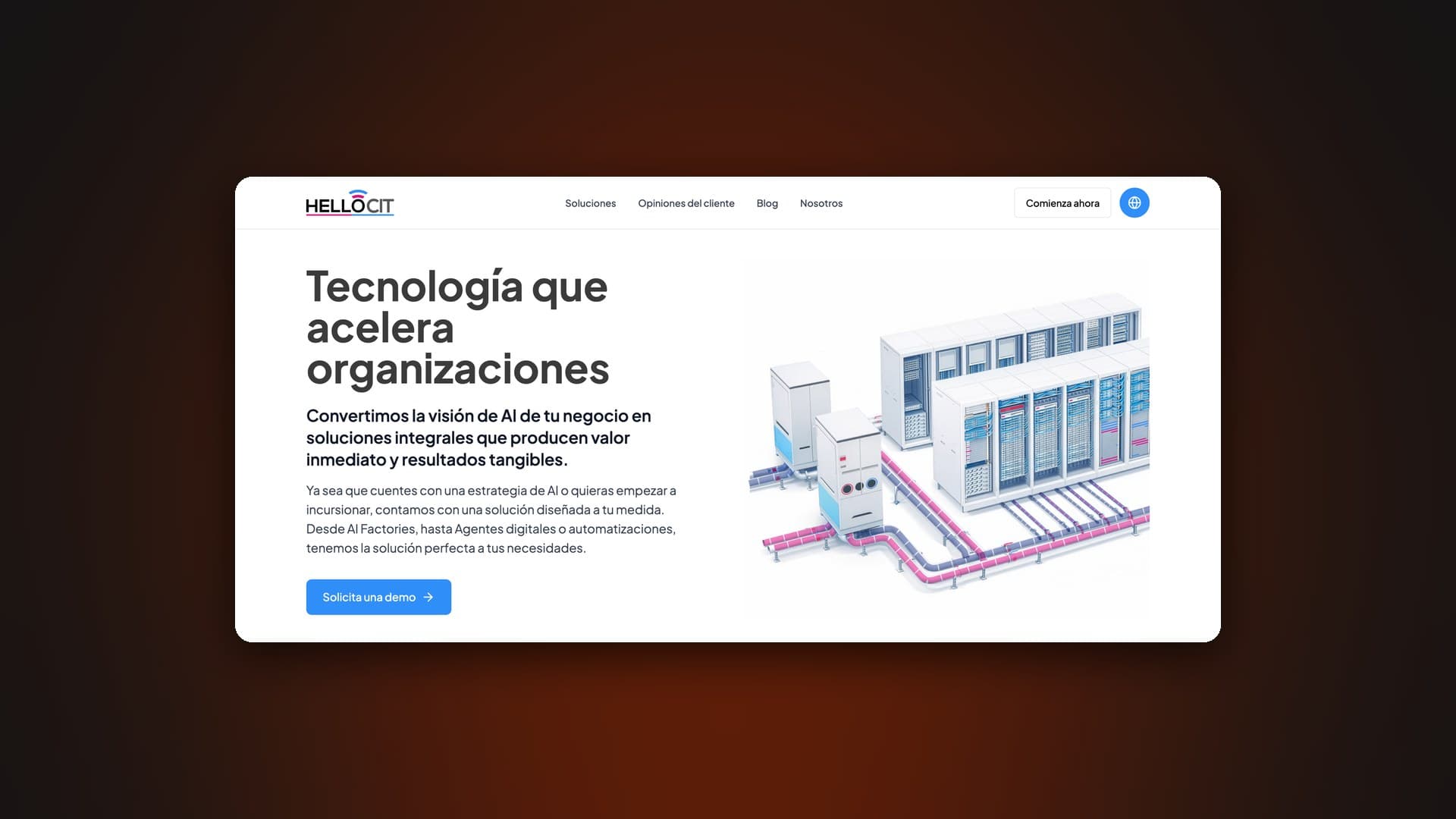
We delivered the Hello CIT marketing website as a modern site in English and Spanish, built with the Next.js App Router and an optional link to WordPress as a headless content source. The work covered the full design, from the hero, solutions, testimonials, FAQ, team, and contact sections to the blog preview and footer, plus a contact form that reliably sends email through Brevo, full SEO, scroll animations, and legal pages. The result is a live site at hellocit.com, hosted on Vercel, where each form entry reaches the client as an HTML email sent through the Brevo API, and search and social previews are set up correctly.