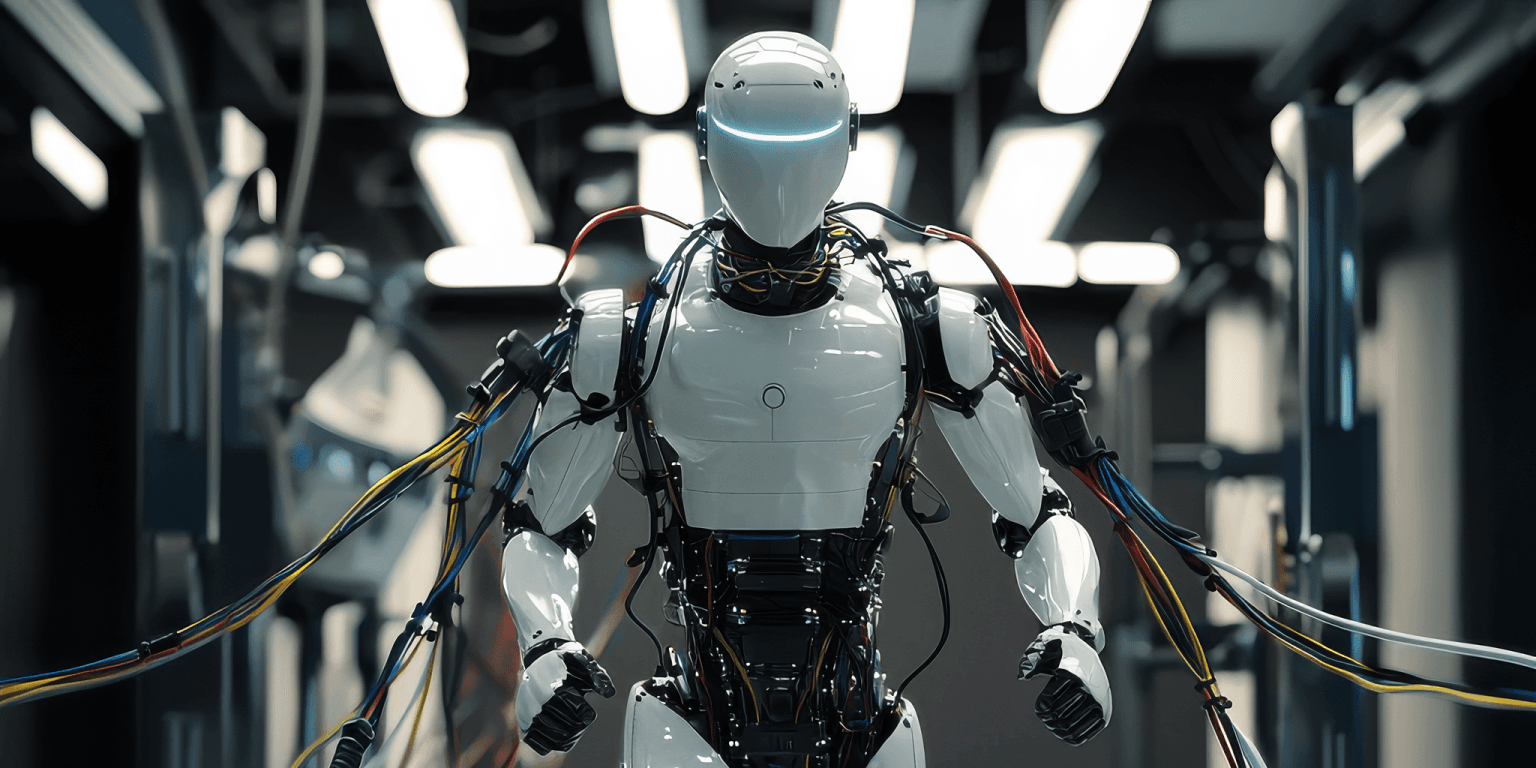
Excited or Terrified by AI?
Artificial Intelligence (AI) has rapidly integrated into various facets of daily life, prompting a spectrum of reactions from the general public. The picture that emerges from the data isn't simple optimism or simple fear, it's both, often held by the same people at the same time, and the latest 2026 research makes that tension sharper, not simpler.
Use Outpaces Comfort
Usage and unease are climbing together. According to Pew Research Center's 2026 survey, 31% of Americans now interact with AI several times a day, up from 22% just two years earlier, and 44% of U.S. adults report using ChatGPT specifically, up from 34% the prior year. Workplace adoption is climbing too, the share of U.S. workers who say at least some of their job is done with AI rose from 16% in 2024 to 21% in a September 2025 survey.
Yet that same research found roughly half of Americans believe AI will worsen people's ability to think creatively and form meaningful relationships with others, with far fewer saying it will make those things better. Familiarity is clearly growing faster than trust.
Privacy and Ethical Concerns
Concerns about how AI handles personal data remain persistent even as adoption grows. Earlier Pew survey data found that over half of Americans believe AI makes it harder to maintain personal privacy, and separate consumer research has found only about a third of UK consumers feel confident using generative AI responsibly, suggesting the gap isn't just about whether people trust AI companies, but whether they trust their own judgment using the tools.
Job Security and Employment
Forrester's often-cited projection estimates that by 2027, automation will displace approximately 24.7 million jobs while creating 14.9 million new ones, a net loss of roughly 9.8 million jobs. Numbers like these help explain why job security consistently ranks among the top public concerns about AI, even in surveys that show broader support for the technology in other respects.
Diverse Global Perspectives
Trust in AI varies sharply by country, and the gap has been remarkably stable across years of research. KPMG's global Trust in AI study found Chinese respondents reporting some of the highest trust, acceptance, and optimism about AI in the world, with 93% of Chinese employees using AI regularly compared to a 58% global average. Earlier KPMG research put willingness to trust AI systems at 67% in China versus 40% in the United States, a gap wide enough that it can't be explained by access to the technology alone; it reflects real differences in culture, institutional trust, and how each country's media covers AI.
Calls for Regulation
Support for AI regulation in the UK is not just strong, it's growing. A 2026 survey reported by TIME found 87% of Britons would back a law requiring AI developers to prove their systems are safe before release, and a majority favor restrictions on developing AI models that would exceed human-level intelligence. Separate research from the Alan Turing Institute found 72% of people say laws and regulation would increase their comfort with AI, up from 62% just a few years earlier, support for regulation is rising in step with usage, not fading as people get used to the technology.
Positive Outlooks
The picture isn't uniformly negative. Public opinion research consistently finds strong majority support for AI applications with a clear, tangible public benefit, cancer risk assessment, educational tools, and climate research chief among them, evidence that concern and optimism about AI aren't mutually exclusive; they coexist depending on the specific application and who benefits from it. People are considerably more comfortable with AI helping a doctor read a scan than with AI making decisions about their job or their data.
How Generations Differ
Age is one of the more consistent predictors of AI sentiment within any single country, not just between countries. Younger adults tend to report higher day-to-day usage and somewhat more comfort experimenting with new AI tools, while older adults report both lower usage and, in several surveys, deeper skepticism about AI's role in high-stakes decisions like healthcare or credit. That gap narrows on specific applications with a clear personal benefit, interest in AI-assisted health monitoring, for instance, tends to be strong across age groups once the benefit is concrete rather than abstract.
This generational pattern matters for anyone building AI products: a single "public" attitude toward AI doesn't really exist. A product aimed at younger, more AI-fluent users can lean into more autonomous, less explained AI behavior, while a product for an older or more skeptical audience typically needs more visible control, explanation, and an easy way to fall back to a human option.
Lessons for Businesses
For any company building AI-powered products, the throughline across all of this research is consistent: usage and skepticism are rising together, and treating them as contradictory is a mistake. The businesses seeing the best reception aren't the ones downplaying AI's risks or overselling its capabilities, they're the ones being specific and honest about what their AI actually does, giving users real visibility into and control over how it's used, and building toward the kind of transparency regulators and the public are both independently asking for. Trust, on this data, isn't won by convincing people AI has no downsides; it's won by demonstrating that the downsides are being taken seriously.
Frequently Asked Questions
Is trust in AI growing?
Both usage and specific concerns are rising together, rather than one replacing the other. More people use AI daily than two years ago, but Pew's 2026 data shows worry about AI's effect on creativity and relationships also increased over the same period, familiarity hasn't resolved unease so much as sharpened people's sense of what specifically concerns them.
Why does trust in AI vary so much by country?
Differences in trust track closely with differences in institutional trust more broadly, media coverage patterns, and how directly the state versus private companies are seen as steering AI development. The gap between China and the United States in KPMG's research has held up consistently across multiple years of study, suggesting it reflects something structural rather than a temporary sentiment swing.
Does support for AI regulation conflict with using AI products?
Not in practice. Surveys consistently find the same population reporting high AI usage and strong support for stricter safety rules simultaneously, people generally want the benefits of the technology alongside real accountability for how it's built and deployed, not one or the other.
Which uses do people back?
Applications with a clear, tangible benefit to an identifiable person tend to poll best, medical diagnostics, educational tools, and climate or scientific research consistently outperform more abstract or self-interested use cases like advertising personalization or workplace monitoring. The common thread isn't the sophistication of the technology; it's whether the person affected can see who benefits and how.
Can I trust one-off polls?
Treat a single number with some caution, especially without a source, sample size, or date attached. Public sentiment on AI has moved quickly enough that a statistic from 2023 can already be stale, and different survey methodologies (a nationally representative panel versus an opt-in online poll) can produce meaningfully different results on the same question. The figures cited throughout this piece are drawn from named research organizations for exactly that reason: so the underlying methodology and date are checkable rather than taken on faith.
Do people's stated concerns about AI actually change their behavior?
Not always, and that gap says something on its own. Plenty of survey respondents report real concern about AI's effect on privacy or employment while continuing to use AI tools daily, which isn't necessarily inconsistent. It reflects a public that has largely concluded the technology is now unavoidable in daily life and workplaces, so the practical question for most people has shifted from whether to engage with AI to how much oversight and choice they get while doing so. That shift, more than any single statistic in this piece, is probably the clearest signal of where public opinion on AI is actually headed. It also explains why the businesses and regulators paying closest attention to this data aren't trying to talk people out of their concerns, but building the oversight that would let people hold both usage and skepticism at once without contradiction, which is a more useful goal than chasing a universal enthusiasm that the data consistently suggests isn't coming anytime soon, in the US or anywhere else.
Conclusion
Public perception of AI is complex and multifaceted, and 2026's data shows that complexity deepening rather than resolving as adoption grows. As AI continues to evolve, addressing ethical considerations, ensuring transparency, and implementing robust regulations, several approaches to which we cover in more detail in our piece on practical AI regulation, will be crucial to closing the gap between where public trust is today and where the technology is headed.
Related insights

What an MCP server is and when to build one
A plain guide to the Model Context Protocol: what an MCP server does, the signs your team needs a custom one, and how to build one that cites its sources.
read more →
How to cut your LLM bill and keep quality
Where LLM API spend really goes, five changes that cut it the most, and how to prove the cheaper setup still gives your users the right answer.
read more →